Source Medical Use Polyurethane Foam Dressing for Hospital, Clinic, Pharmacy
Find 30 suppliers of medical use polyurethane foam dressing for hospital, clinic, and pharmacy applications. Buyers can compare specifications like thickness, absorbency, and sterilization methods to select the right wound care solution.
Key considerations
Products List




Comprehensive Sourcing Guide
Strategic Sourcing Guide for Medical Use Polyurethane Foam Dressings
Understanding Technical Specifications and Material Composition
When sourcing medical use polyurethane foam dressings, buyers must first establish a clear understanding of the core material composition and physical specifications that define product performance. The primary material identified in the market for these devices is Polyurethane (PU) Foam, often combined with silicone and nonwoven layers to create a composite structure. This specific material selection is critical because it directly influences the dressing's ability to manage wound exudate while maintaining a moist healing environment. The product is classified technically as a "Biologically Active Dressing" or "Foam Dressing," designed specifically for the management of moderate to heavily exuding wounds.
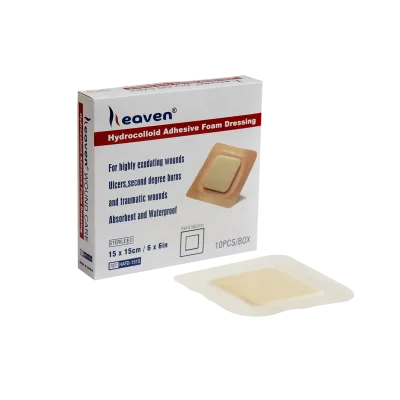
The physical dimensions of the dressing are a primary variable in procurement. Market observations indicate a wide range of standard sizes, including 5x5cm, 7.5x7.5cm, 10x10cm, 15x15cm, and 20x20cm, alongside fully customizable options. The thickness of the foam layer is another critical specification, with observed values reaching up to 5mm. This thickness is not merely a dimensional attribute but a functional one, providing the necessary cushioning for pressure ulcer management and the capacity to absorb significant fluid volumes. Buyers should verify that the supplier can consistently maintain this thickness tolerance across different batch productions, as variations can affect the dressing's fit and absorption rate.
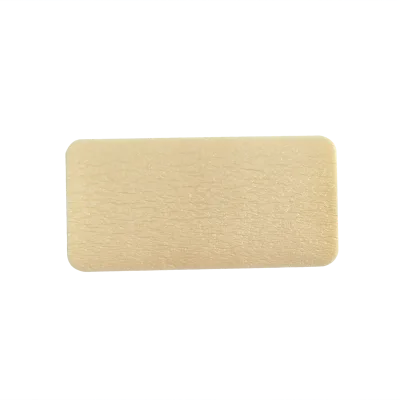
Furthermore, the structural features of the dressing include specific functional attributes such as being waterproof, breathable, and anti-allergy. The presence of a silicone layer in some variants suggests an added benefit of gentle adhesion and reduced trauma upon removal, which is essential for patient comfort. The color of the product is typically observed as white or skin color, though khaki variants are also noted in the market. These visual characteristics, while seemingly minor, play a role in clinical identification and patient acceptance. The shape of the dressing is equally versatile, available in round, rectangle, square, or custom configurations to match specific wound geometries.
| Feature Category | Observed Attributes | Procurement Verification Point |
|---|---|---|
| Material Composition | PU Foam, Silicone, Nonwoven | Verify layer bonding and material purity |
| Dimensions | 5x5cm to 20x20cm, Customized | Confirm tolerance on thickness (e.g., 5mm) |
| Functional Properties | Waterproof, Breathable, Anti-Allergy | Request data on fluid vapor transmission rates |
| Shape Options | Round, Rectangle, Square, Custom | Check mold availability for non-standard shapes |
| Color | White, Skin Color, Khaki | Ensure color consistency for clinical identification |
Compliance, Certification, and Regulatory Standards
Navigating the regulatory landscape is a non-negotiable aspect of sourcing medical devices. The polyurethane foam dressing market is characterized by a mix of certifications that vary by region and intended market. High-confidence data indicates that products frequently carry CE certification, often accompanied by ISO 13485, which is the international standard for quality management systems specific to medical devices. Some listings also reference FDA 510K clearance, a crucial regulatory milestone for entering the United States market, indicating that the device is substantially equivalent to a legally marketed predicate device.
The classification of the instrument is another vital compliance metric. These dressings are generally categorized as Class II medical devices, which implies a moderate to high risk and necessitates special controls to ensure safety and effectiveness. Buyers must rigorously verify the specific certification status of the supplier's facility and their specific product lines. It is essential to distinguish between the certification of the manufacturing site and the certification of the specific product model, as a facility may hold ISO 13485 while a specific product line might only hold CE marking.
Sterilization methods are a critical component of regulatory compliance. The market presents a dichotomy in sterilization approaches. Some products are explicitly stated to be "Without Ethylene Oxide Sterilization," while others are listed as "Eo Sterilized" or utilizing "Gamma Ray" disinfection. This inconsistency requires careful scrutiny. If a buyer's target market requires Ethylene Oxide (EO) sterilization due to specific biocompatibility or residue concerns, they must ensure the supplier's process aligns with this requirement. Conversely, if Gamma Ray sterilization is preferred for its ability to penetrate packaging without leaving residues, the supplier must provide validation data for this specific method. The shelf life, observed to be up to 3 years, is directly linked to the chosen sterilization method and packaging integrity.
Cost Drivers and Pricing Dynamics
The pricing structure for medical use polyurethane foam dressings is influenced by several distinct factors, creating a wide range in observed market prices, typically falling between $0.01 and $5.00 USD per unit. This broad range is not indicative of quality variance alone but is heavily driven by the complexity of the product configuration. The primary cost driver is the level of customization. Standard sizes like 5x5cm or 10x10cm generally command lower unit costs due to economies of scale in production. In contrast, custom shapes, specific thicknesses, or unique material combinations (such as adding a silicone adhesive layer) will significantly increase the per-unit price.
Minimum Order Quantity (MOQ) is another significant determinant of the effective cost. The observed MOQ range spans from 1,000 to 20,000 units. Suppliers with higher MOQ requirements often offer more competitive unit pricing, as they can optimize their production runs. Buyers with lower volume needs may face higher per-unit costs or may need to negotiate specific terms to access the lower end of the price spectrum. Additionally, the packaging method influences cost. Products packaged in sterile individual pouches within boxes or cartons incur higher packaging and sterilization costs compared to bulk packaging.
Logistics and origin also play a role in the final landed cost. Most suppliers are located in Huizhou, Guangdong, China, a major manufacturing hub for medical devices. While this location offers competitive labor and material costs, buyers must factor in shipping, import duties, and potential tariffs when calculating the total cost of ownership. The "Two Years" quality guarantee period mentioned in product attributes suggests that the cost of the product includes a buffer for potential quality issues, which can be a value-add for buyers concerned about long-term reliability.
Typical Applications and Clinical Indications
The application of polyurethane foam dressings is diverse, spanning from hospital settings to pharmacies and clinics. The primary clinical indication is the management of pressure ulcers, a common and serious condition requiring specialized wound care. The high absorbency of these dressings makes them particularly suitable for wounds that produce moderate to heavy exudate. By effectively managing fluid, the dressing helps maintain a moist wound environment, which is scientifically proven to accelerate healing and reduce the frequency of dressing changes.
Beyond pressure ulcers, these dressings are indicated for general wound care applications where absorption and protection are paramount. The "Biologically Active" classification suggests that some variants may offer additional therapeutic benefits beyond simple absorption, potentially interacting with the wound bed to promote healing. The "Comfortable" attribute, frequently cited in product descriptions, highlights the importance of patient experience. Dressings that are soft, breathable, and waterproof contribute to patient mobility and comfort, reducing the risk of skin maceration and secondary infections.
The versatility of the product allows for use in various care settings. In hospitals, they are used for acute wound management, while in clinics and pharmacies, they serve as essential supplies for outpatient care and home health. The "Personal Care" application category indicates that these products may also be utilized in non-clinical settings for minor wound management or post-procedural care. The ability to customize the dressing size and shape ensures that it can be applied to a wide variety of wound locations, from the flat surfaces of the back and heels to more complex anatomical contours.
Supplier Evaluation and Quality Assurance
Evaluating a supplier for medical use polyurethane foam dressings requires a multi-faceted approach that goes beyond simple price comparison. Buyers should prioritize suppliers who demonstrate a robust quality management system, ideally certified to ISO 13485. This certification is a strong indicator that the supplier has established processes for design control, risk management, and production consistency. The presence of FDA 510K clearance is another strong signal of a supplier's commitment to meeting rigorous regulatory standards, particularly for the North American market.
Quality assurance should also extend to the production process itself. Buyers must verify the supplier's capability to maintain the "Two Years" quality guarantee period. This guarantee implies a commitment to product stability and performance over time. It is essential to request documentation regarding the shelf life validation, which is observed to be up to 3 years in some cases. The consistency of the sterilization process is another critical area of evaluation. Whether the supplier uses Ethylene Oxide, Gamma Ray, or another method, they must provide validation reports proving the sterility assurance level (SAL) meets international standards.
Packaging integrity is a key component of quality assurance. The observed packaging methods include PE Film Packaging, Box and Carton, and sterile individual pouches. Buyers should assess the supplier's ability to maintain the sterility of the product throughout the supply chain. The "10 pcs per package" standard and the "1PCS/Pouch, 10PCS/Box" configurations suggest a focus on both bulk efficiency and individual unit protection. A reliable supplier will have a robust system for tracking lot numbers and ensuring traceability from raw material to finished product.
Long-Term Procurement and Supply Chain Considerations
Sourcing medical devices is a long-term commitment that requires careful consideration of supply chain stability and future scalability. The availability of customization is a significant advantage for buyers, as it allows for tailored solutions that can adapt to changing clinical needs. However, buyers must ensure that the supplier has the capacity to handle customized orders without compromising lead times or quality. The "Customization: Available" attribute suggests flexibility, but the specific lead times and minimum order quantities for custom orders should be clarified during the negotiation phase.
The location of the supplier in Huizhou, Guangdong, China, offers access to a robust supply chain for raw materials like PU foam and nonwoven fabrics. However, buyers should be aware of potential geopolitical or logistical disruptions that could affect lead times. Establishing a relationship with a supplier who has a proven track record of on-time delivery is crucial. The "Two Years" quality guarantee period provides a safety net, but buyers should also establish clear protocols for handling quality complaints or product recalls.
Finally, buyers should consider the total cost of ownership, which includes not just the unit price but also the cost of inventory management, storage, and potential waste. The high absorbency and comfort features of the dressing can reduce the frequency of dressing changes, leading to cost savings in nursing time and material usage. By selecting a supplier who offers a wide range of sizes and customization options, buyers can optimize their inventory levels and reduce the risk of stockouts. The combination of competitive pricing, robust certifications, and flexible customization makes the polyurethane foam dressing market a viable option for healthcare providers seeking high-quality wound care solutions.
FAQs
What certifications do medical use polyurethane foam dressings typically hold?
These dressings commonly hold CE and ISO 13485 certifications, with some variants also possessing FDA 510K clearance. Buyers must verify specific product lines for these marks as facility certification does not always guarantee individual product approval.
How is the thickness of the foam dressing specified in procurement?
The foam layer thickness is typically observed at 5mm to provide cushioning and absorbency for moderate to heavy exudate. This dimension is critical for pressure ulcer management and requires consistent tolerance verification across production batches.
Which sterilization methods are used for these wound care products?
Products utilize Ethylene Oxide, Gamma Ray, or may be produced without Ethylene Oxide sterilization depending on the specific listing. Buyers must confirm the exact method to ensure compliance with target market residue and biocompatibility requirements.
Can buyers request customized sizes and shapes for these dressings?
Yes, customization is available for various sizes including 5x5cm up to 20x20cm and shapes like round or square. Custom orders often impact unit pricing and minimum order quantities compared to standard stock configurations.
What is the typical shelf life for these biologically active dressings?
The observed shelf life extends up to 3 years when stored correctly in sterile individual packaging. This duration is directly linked to the chosen sterilization method and the integrity of the PE film or box packaging.
How do MOQ requirements affect the pricing of these foam dressings?
Minimum Order Quantities range from 1,000 to 20,000 units, with higher volumes often securing lower per-unit costs. Standard sizes generally command lower prices than custom configurations due to economies of scale in production runs.
Where are the primary manufacturing locations for these medical devices?
Most suppliers are located in Huizhou, Guangdong, China, a major hub for medical device production. Buyers should factor in logistics and import duties when calculating the total landed cost from this specific origin region.